 Commodity 1
Tin Ore
For Industrial and Commercial Uses
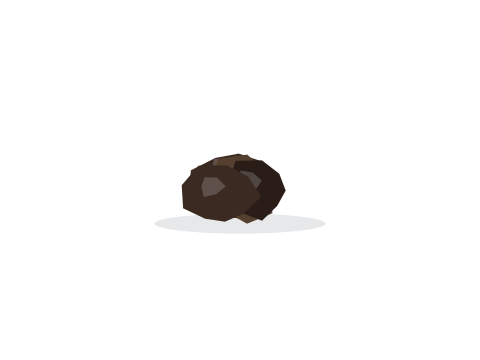
Tin ore is a mineral that contains tin, a soft, rare, silver-white metal, often found combined with other metals such as tantalum, tungsten, and lithium. The most crucial tin ore is cassiterite (SnO₂), a tin oxide mineral that is usually opaque or translucent in thin crystals. Other tin ores include stannite, cylindrite, franckeite, canfieldite, and teallite — all less common than cassiterite. Tin ore is used in solder, bronze, tinplate, glassware, and chemicals. According to the International Tin Association, the world's total tin ore reserves stood at 15.4 million tons at the end of 2019.
| Type | Chemical Formula | Geological Setting | Color |
|---|---|---|---|
| Cassiterite | SnO₂ | Placer, vein, and massive sulfide deposits | Opaque, translucent in thin crystals — most common |
| Stannite | Cu₂FeSnS₄ | Vein deposits | Opaque, brassy luster |
| Cylindrite | SnS | Placer deposits | Opaque, lead-gray |
| Franckeite | SnSb₂S₄ | Vein deposits | Opaque, steel gray |
| Teallite | SnS₂ | Vein deposits | Opaque, lead-gray |
The global tin ore market is worth an estimated USD 6.8 billion in 2023, projected to reach USD 9.35 billion by 2030, driven by electronics (about 40% of demand), automobile, and construction industries. Nigeria is the 14th largest tin producer globally, producing up to 7,500 tons in 2022, with potential untapped reserves of 32,000 MT, mainly in the Jos Plateau, Cross River State, and Akwa Ibom State.
Why Buy Tin Ore From Commodity 1?
Supply of tin ore is expected to remain tight in the coming years due to limited resource availability, likely supporting continued market growth. Nigeria is the world's 14th largest tin producer, with estimated reserves of over 32,000 metric tons, most of it on the central Jos Plateau, Africa's main tin mining region.
Commodity 1 provides tin ore directly from the mine site to the global market. There are no middlemen involved, only our staff on the ground. We aim to be our customers' tin ore supplier and offer the best prices for our buyers.
| Metal | Percentage |
|---|---|
| Tin | 67% |
| Iron | 15% |
| Quartz | 12% |
| Other metals | 6% |
Packaging & Delivery
| Detail | Value |
|---|---|
| Packaging | Lumps / chips |
| Port | Lagos Apapa Port, Nigeria |
| Bags | 50 kg |
| Container | 20 ft |
| Quantity | 25–125 MT per month |
| Lead time | 30 days |
Physical & Chemical Properties
| Property | Value |
|---|---|
| Appearance | Black, brown, or reddish-brown, sub-metallic to metallic luster |
| Hardness | 6–7 (Mohs) |
| Density | 6.4–7.1 g/cm³ |
| Specific gravity | 7.29 |
| Melting point | 232°C (450°F) |
| Boiling point | 2,270°C (4,098°F) |
| Chemical formula | SnO₂ |
| Molecular weight | 78.69 g/mol |
| Toxicity | Low |
Industrial Uses of Tin Ore
| Use | Description |
|---|---|
| Solder | Combined with lead or antimony to join metal pieces |
| Tinplate | Steel coated with tin, used to make food and beverage cans |
| Metal alloys | Combined with copper, lead, and antimony to make bronze, pewter, and solder |
| Electronics | Used in transistors, diodes, and capacitors as a good conductor |
| Paints | A good corrosion inhibitor |
| Plastics | A good lubricant and mold-release agent |
| Other uses | Bearings, jewelry, and musical instruments |